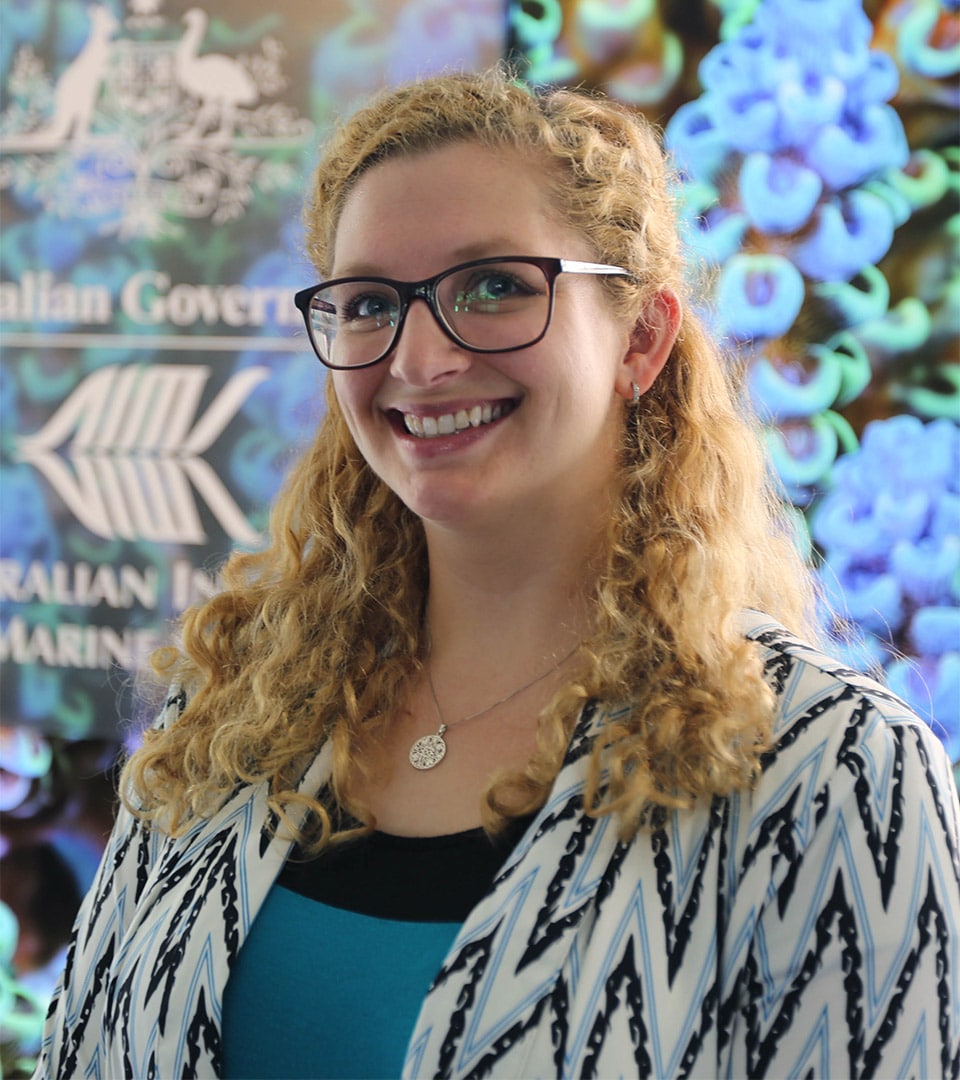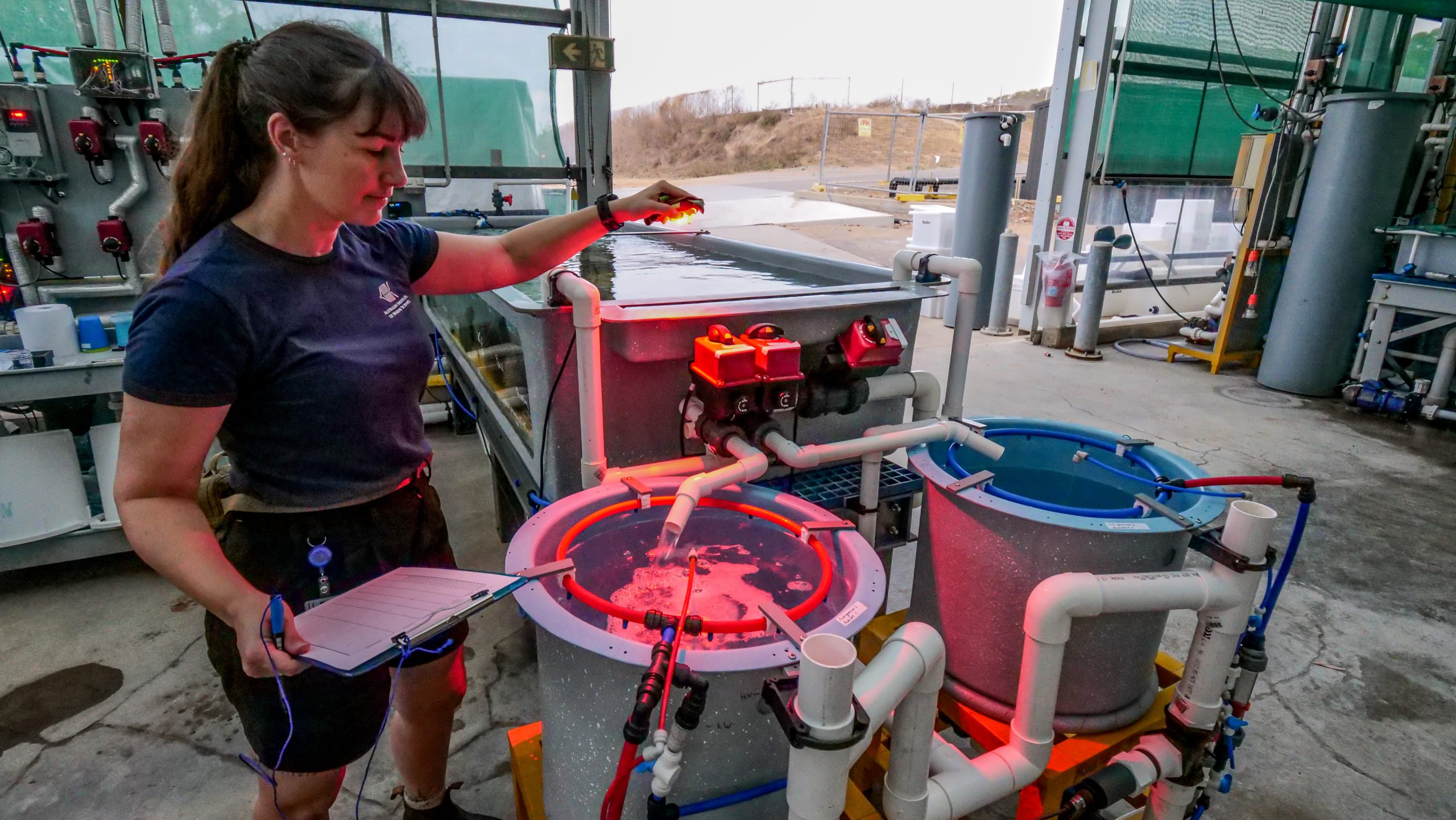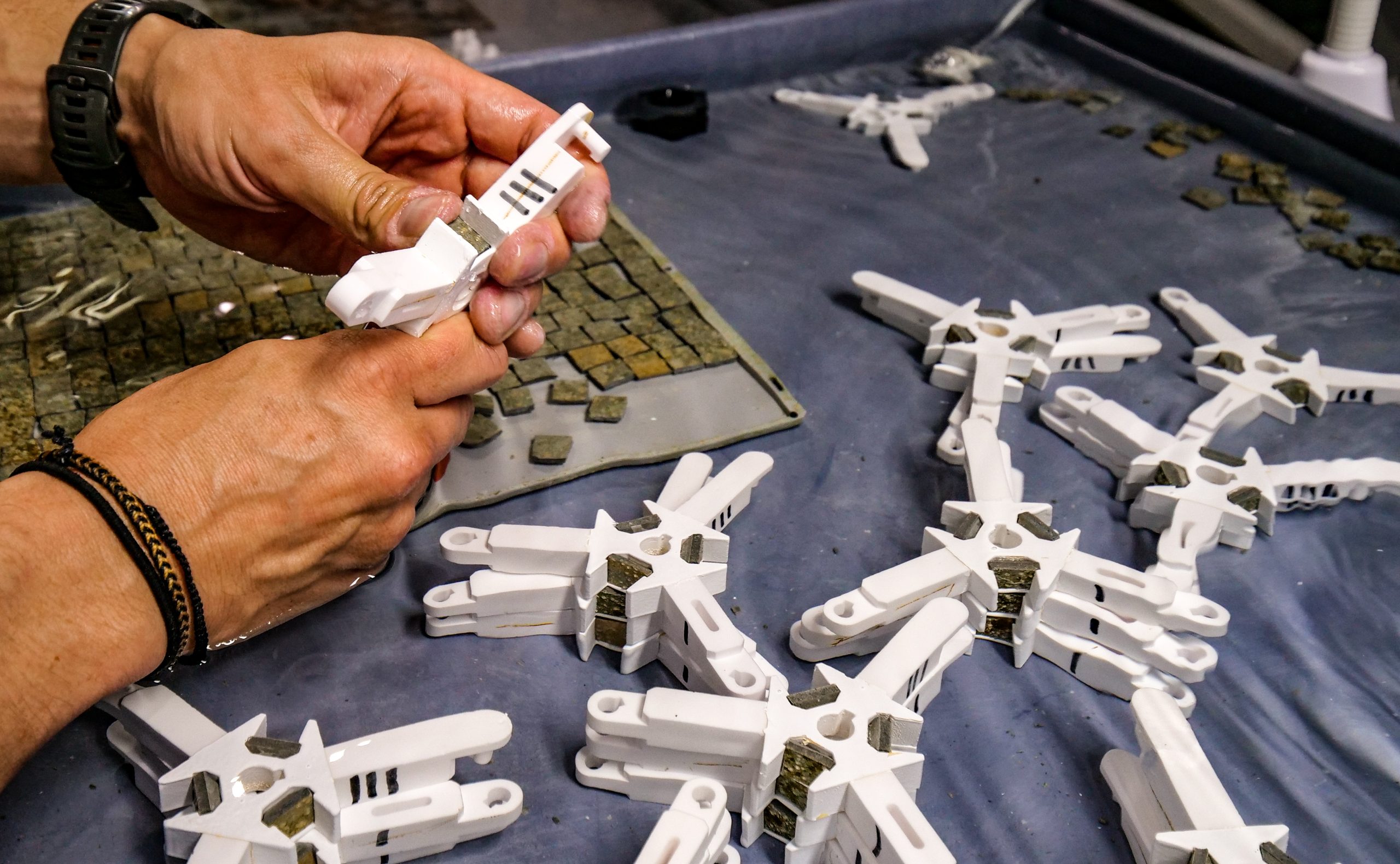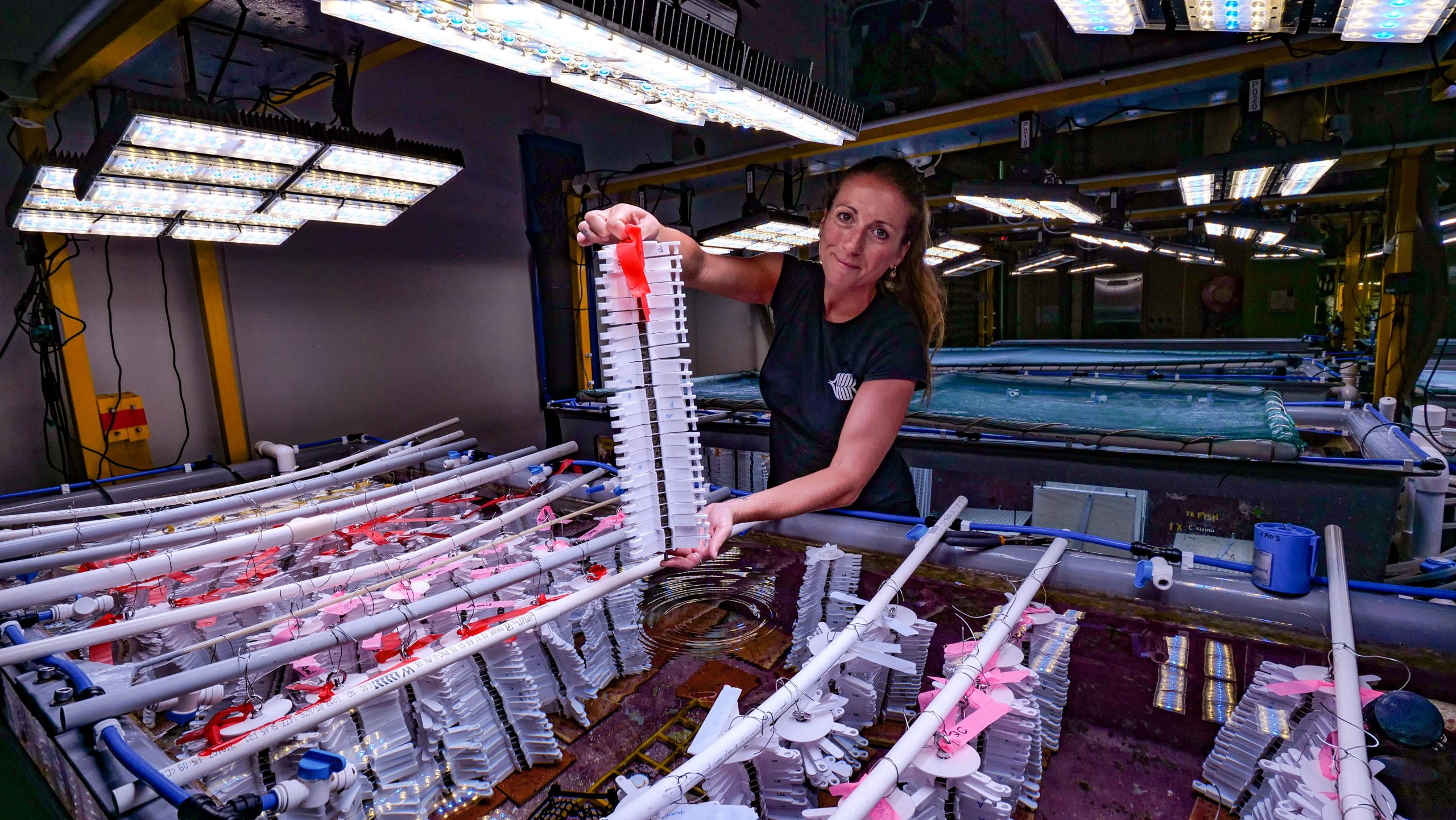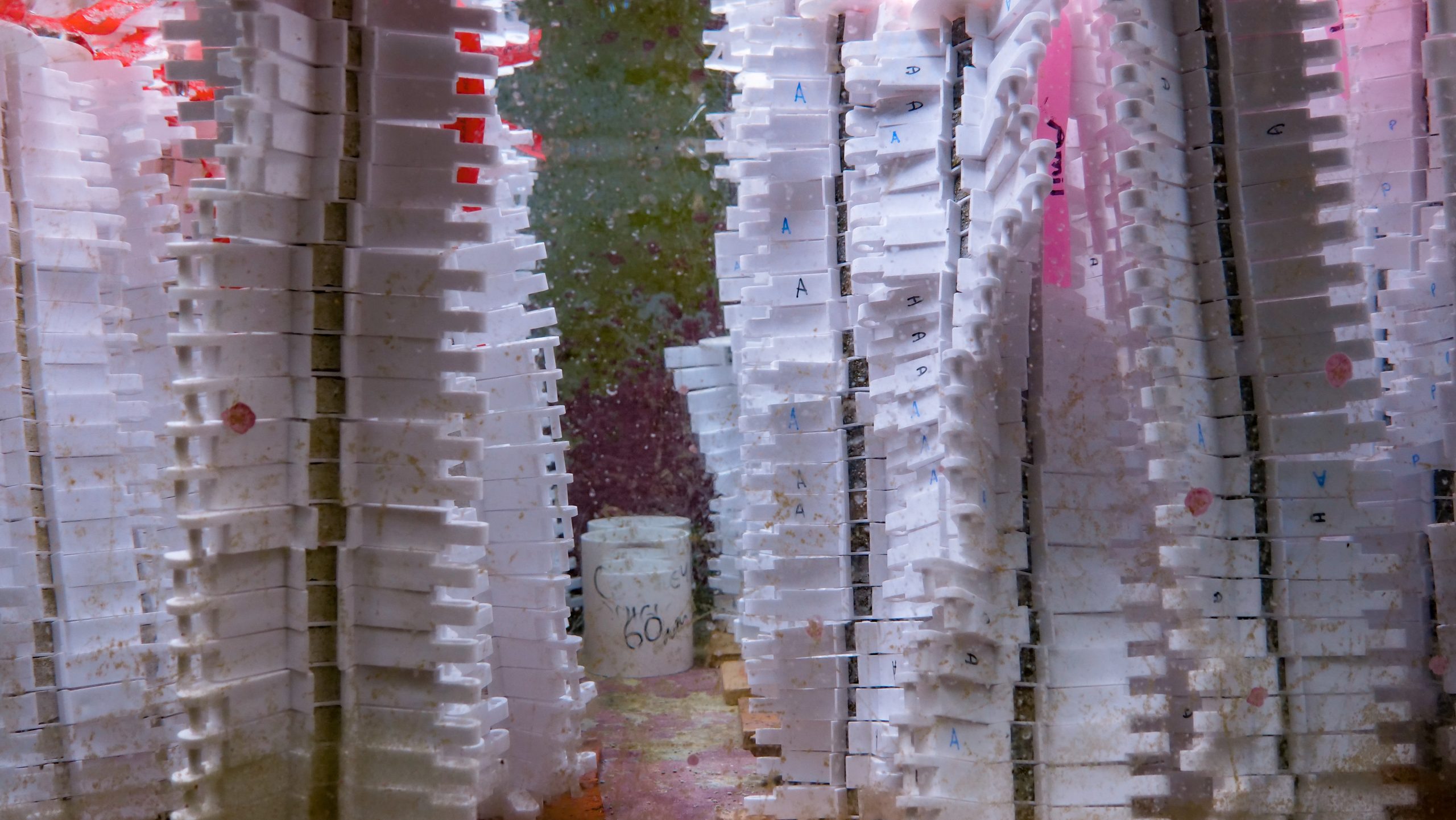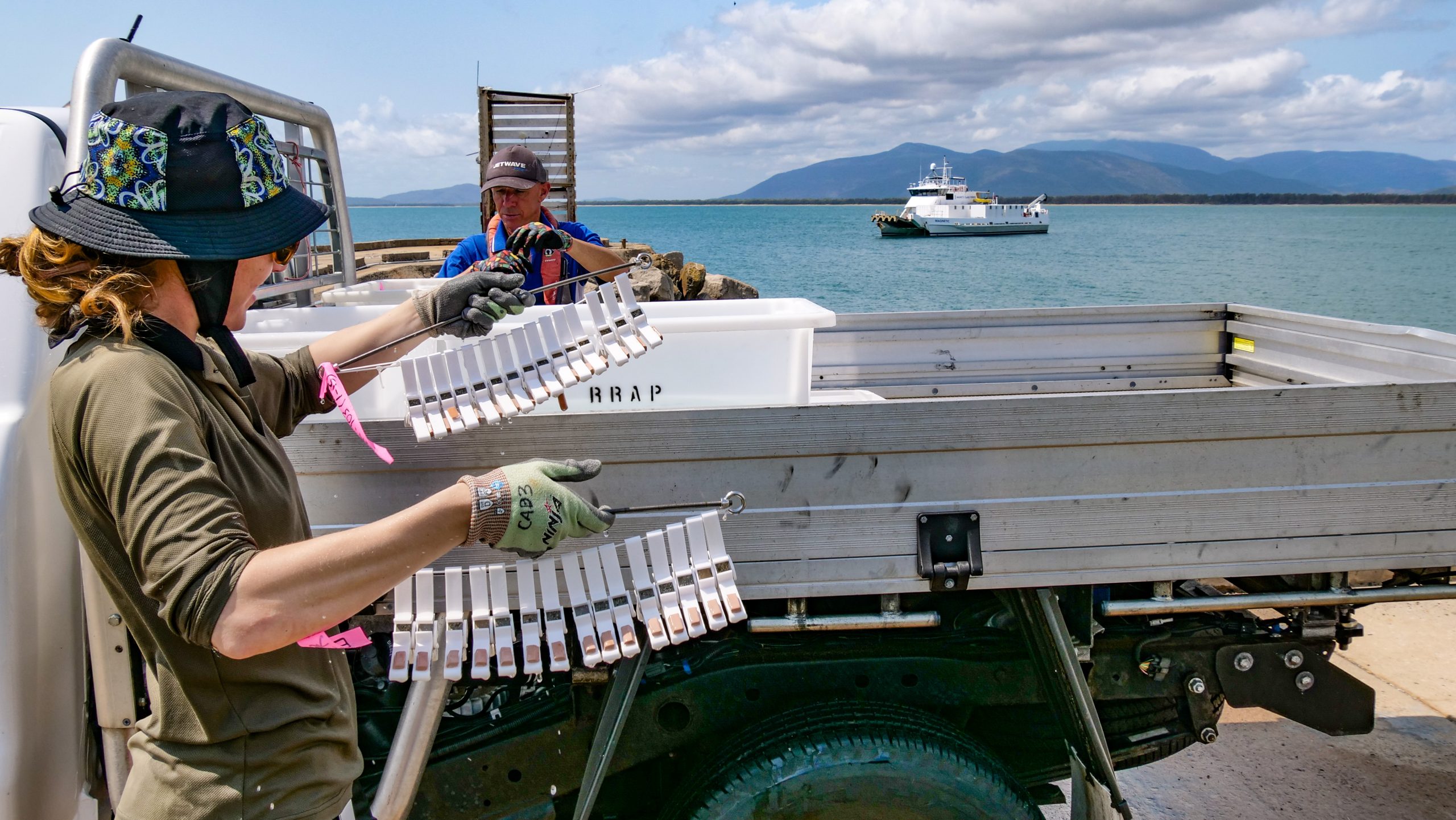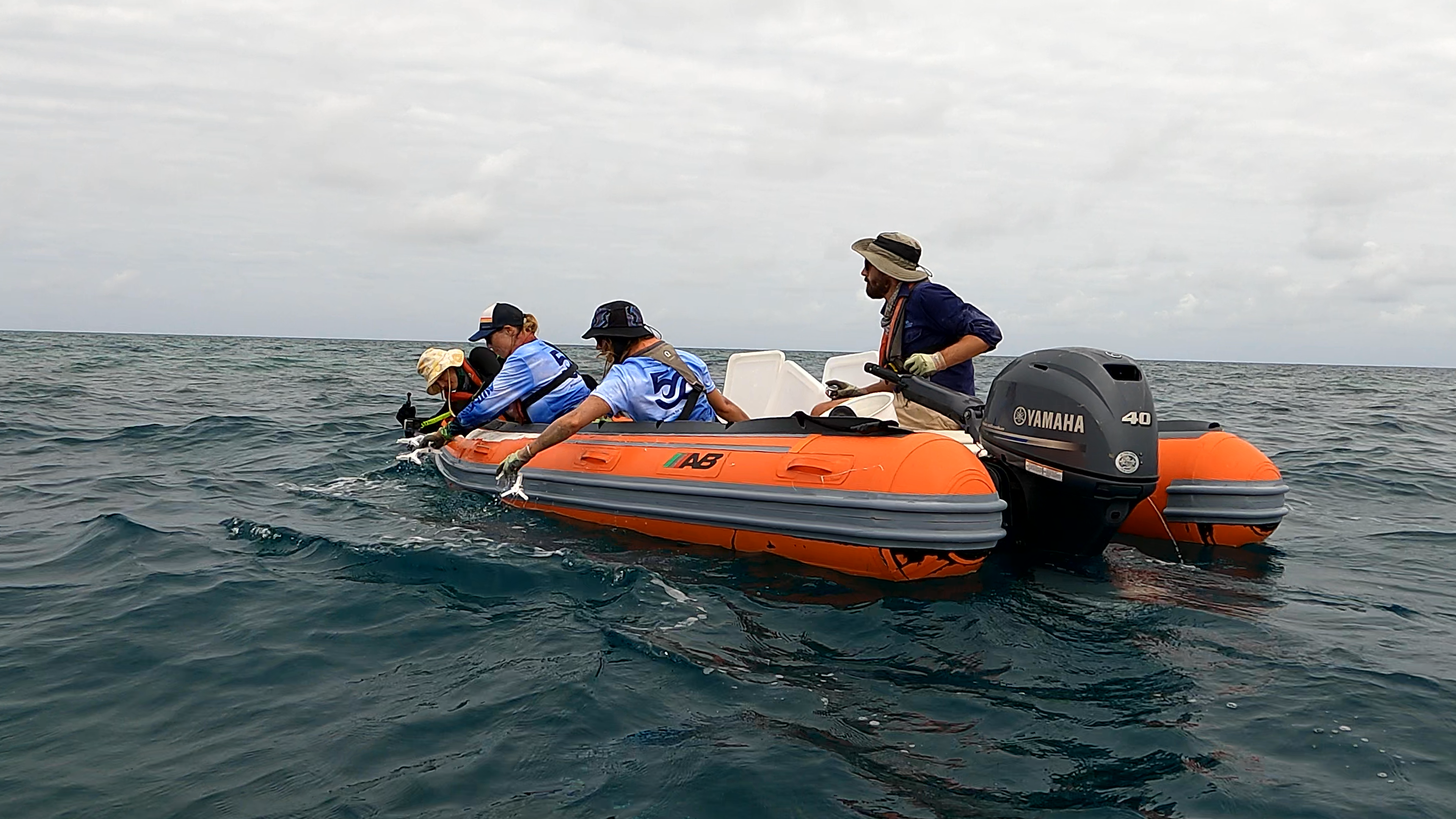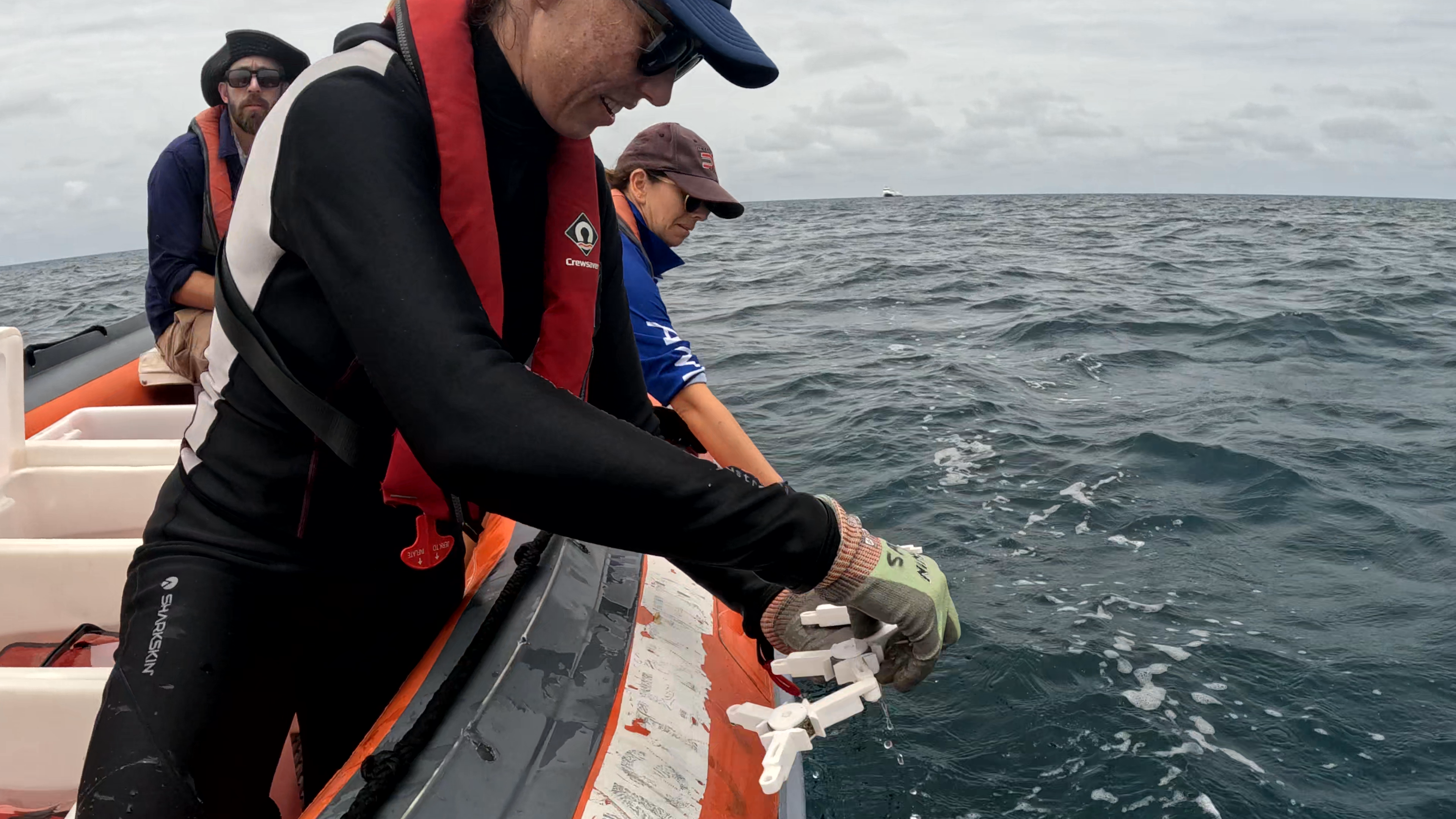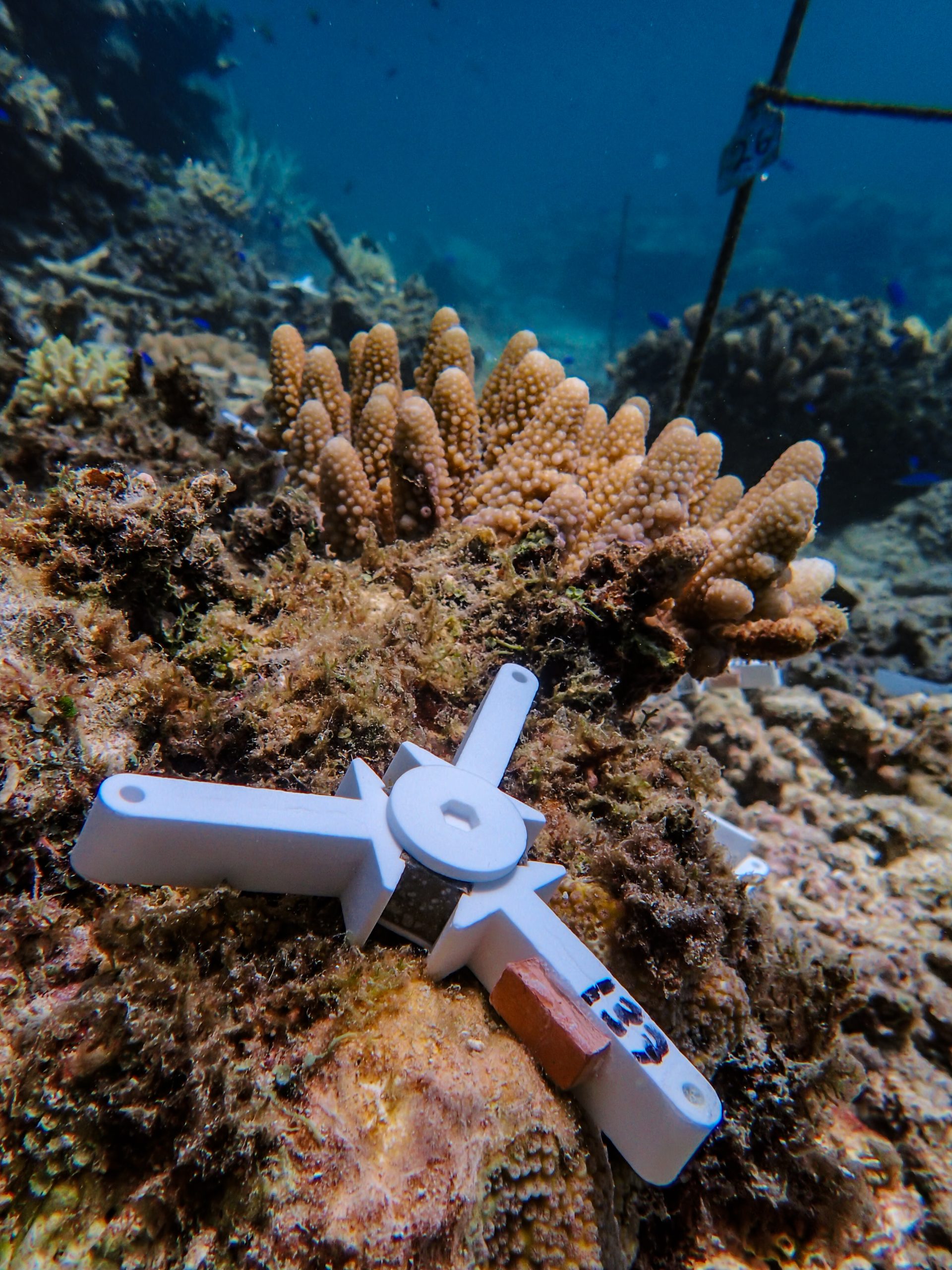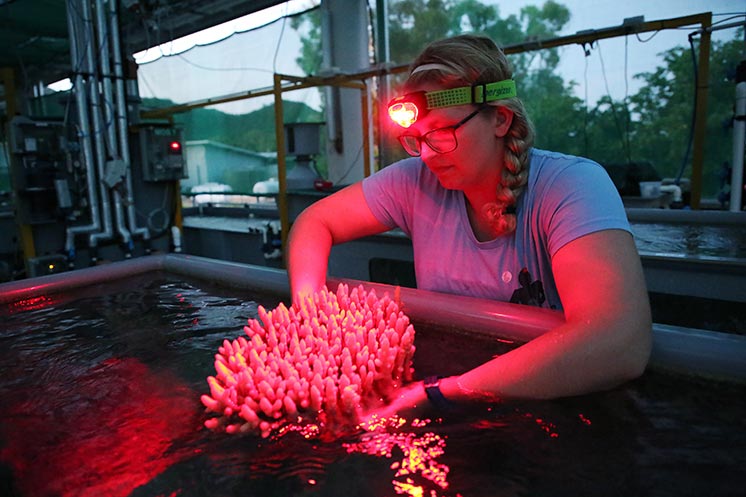
Dr Carly Randall conducting spawning research in the National Sea Simulator, AIMS, during coral spawning. Photo: Marie Roman
The RRAP Coral Aquaculture and Deployment Subprogram was part of RRAP’s first R&D phase and aimed to deliver the means to reliably breed corals in captivity at low cost, at a medium scale using sexual and asexual methods.
The ability to effectively mass-produce corals to high standards will underpin the success of medium- to large-scale reef restoration initiatives and interventions and could help conserve wild populations.
The Coral Aquaculture and Deployment Subprogram aimed to optimise methods to rear broodstock in aquaculture facilities and improve the survival rate of corals released into the wild.
This subprogram developed the capability for medium-scale aquaculture for a core set of coral species. The research enabled the supply of propagated corals to support small- and medium-scale field trials in later parts of the RRAP R&D Program.
This subprogram also aimed to deliver a comprehensive understanding of the drivers of growth and survival of young propagated corals in natural populations. It produced the knowledge to support selective breeding and treatments for adaptation in the Enhanced Corals and Treatments and the Moving Corals Subprograms, as well as key data for ecological and evolutionary modelling by the RRAP Modelling and Decision Support Subprogram.
This project focused on developing methodology and technology that optimises coral propagation in an aquaculture setting, as well as enhancing coral larvae settlement survival. The results will inform the design of settlement devices that maximise post-deployment survival across coral species and environments.
This project focused on developing automated and high-throughput technologies and workflows that allow for mass production, survival and growth of corals grown in an aquaculture setting.
This project led, coordinated, and managed the integrated field program, engagement training and data management for all projects under both the Enhanced Corals and Treatments and Coral Aquaculture and Deployment subprograms.
Randall, C.J., Giuliano, C., Mead, D. et al. Immobilisation of living coral embryos and larvae. Sci Rep 9, 14596 (2019). https://doi.org/10.1038/s41598-019-51072-5
Randall, C. J., Speaks, J. E., Lager, C., Hagedorn, M., Llewellyn, L., Pulak, R., Thompson, J., Bay, L. K., Mead, D., Heyward, A. J., & Negri, A. P. (2020). Rapid counting and spectral sorting of live coral larvae using large-particle flow cytometry. Scientific Reports, 10, Article 12919. https://doi.org/10.1038/s41598-020-69491-0
Randall, C. J., Negri, A. P., Quigley, K. M., Foster, T., Ricardo, G. F., Webster, N. S., Bay, L. K., Harrison, P. L., Babcock, R. C., & Heyward, A. J. (2020). Sexual production of corals for reef restoration in the Anthropocene. Marine Ecology Progress Series, 635, 203–232. https://doi.org/10.3354/meps13206
Randall, C. J., Giuliano, C., Heyward, A. J., & Negri, A. P. (2021). Enhancing coral survival on deployment devices with microrefugia. Frontiers in Marine Science, 8, 662263. https://doi.org/10.3389/fmars.2021.662263
Roepke, L. K., Brefeld, D., Soltmann, U., Randall, C. J., Negri, A. P., & Kunzmann, A. (2022). Antifouling coatings can reduce algal growth while preserving coral settlement. Scientific Reports, 12, Article 15935. https://doi.org/10.1038/s41598-022-19997-6
Roepke, L. K., Brefeld, D., Soltmann, U., Randall, C. J., Negri, A. P., & Kunzmann, A. (2022). Applying behavioral studies to the ecotoxicology of corals: A case study on Acropora millepora. Frontiers in Marine Science, 9, Article 1002924. https://doi.org/10.3389/fmars.2022.1002924
Briggs, N.D., Page, C.A., Giuliano, C. et al. Dissecting coral recovery: bleaching reduces reproductive output in Acropora millepora. Coral Reefs 43, 557–569 (2024). https://doi.org/10.1007/s00338-024-02483-y
Abdul Wahab, M.A., Ferguson, S., Snekkevik, V.K. et al. Hierarchical settlement behaviours of coral larvae to common coralline algae. Sci Rep 13, 5795 (2023). https://doi.org/10.1038/s41598-023-32676-4
Randall, C.J., Giuliano, C., Stephenson, B. et al. Larval precompetency and settlement behaviour in 25 Indo-Pacific coral species. Commun Biol 7, 142 (2024). https://doi.org/10.1038/s42003-024-05824-3
Ramsby, B.D., Emonnot, F., Flores, F. et al. Low light intensity increased survival of coral spat in aquaculture. Coral Reefs 43, 627–640 (2024). https://doi.org/10.1007/s00338-024-02489-6
Jeong, S. Y., Gabrielson, P. W., Hughey, J. R., Hoey, A. S., Cho, T. O., Abdul Wahab, M. A., & Diaz-Pulido, G. (2023). New branched Porolithon species (Corallinales, Rhodophyta) from the Great Barrier Reef, Coral Sea, and Lord Howe Island. Journal of Phycology, 59(5), 1025–1041. https://doi.org/10.1111/jpy.13387
Pratchett, M. S., Baird, A. H., & Pratchett, D. J. (2022). Settlement cue selectivity by larvae of the destructive crown-of-thorns starfish. Biology Letters, 18(11), 20220399. https://doi.org/10.1098/rsbl.2022.0399
Randall, C. J., Giuliano, C., Allen, K., Bickel, A., Miller, M., & Negri, A. P. (2022). Site mediates performance in a coral‐seeding trial. Restoration Ecology, 30(6), e13745. https://doi.org/10.1111/rec.13745
Severati, A., Nordborg, M., Heyward, A., Abdul Wahab, M., Brunner, C. A., Montalvo-Proaño, J., & Negri, A. P. (2024). The AutoSpawner system – Automated ex situ spawning and fertilisation of corals for reef restoration. Journal of Environmental Management, 366, 121886. https://doi.org/10.1016/j.jenvman.2024.121886
Whitman, T.N., Hoogenboom, M.O., Negri, A.P. et al. Coral-seeding devices with fish-exclusion features reduce mortality on the Great Barrier Reef. Sci Rep 14, 13332 (2024). https://doi.org/10.1038/s41598-024-64294-z
Fong, J., Ramsby, B.D., Flores, F. et al. Effects of material type and surface roughness of settlement tiles on macroalgal colonisation and early coral recruitment success. Coral Reefs 43, 1083–1096 (2024). https://doi.org/10.1007/s00338-024-02526-4
Neil, R.C., Heyward, A., Bourne, D.G. et al. Let the fish do the cropping: identifying fish grazers to improve coral aquaculture. Coral Reefs 44, 749–758 (2025). https://doi.org/10.1007/s00338-024-02612-7
Curnock, M. I., Arya, R., Chamberland, E., Chartrand, K., Edmondson, J., Fisher, E. E., Forster, R., Lockie, S., Loder, J., & Nembhard, D. (2024). Reef visitors’ observation of assisted coral recovery devices in situ reduces concern about their use. PLOS ONE, 19(11), e0313345. https://doi.org/10.1371/journal.pone.0313345
Whitman, T. N., Jurriaans, S., Lefevre, C., Sims, C. A., Radford, B., Puotinen, M., Hoogenboom, M. O., Negri, A. P., & Randall, C. J. (2025). Seeded Acropora digitifera corals survive best on wave-exposed reefs with grazing from small fishes. Restoration Ecology, 1–12. Advance online publication. https://doi.org/10.1111/rec.70016
Neil, R. C., Barton, J. A., Dougan, W., Dworjanyn, S., Heyward, A., Mos, B., Bourne, D. G., & Humphrey, C. (2024). Size matters: Microherbivores make a big impact in coral aquaculture. Aquaculture, 581, 740402. https://doi.org/10.1016/j.aquaculture.2023.740402
Fong, J., Jackson, T.L., Flores, F. et al. The interplay of temperature, light, and substrate type in driving growth and reproduction of an important tropical crustose coralline alga. J Appl Phycol 36, 3133–3145 (2024). https://doi.org/10.1007/s10811-024-03312-z
Montalvo-Proano, J., Flores, F., Severati, A. et al. Fouling release coatings reduce colonisation of coral seeding devices. Sci Rep 15, 24023 (2025). https://doi.org/10.1038/s41598-025-08268-9
Neil, R. C., Barton, J. A., Heyward, A., Francis, D. S., Nankervis, L., Mock, T. S., Bourne, D. G., & Humphrey, C. (2025). Improving coral grow-out through an integrated aquaculture approach. Aquaculture Nutrition, 2025(1), 1–13. https://doi.org/10.1155/anu/1446195
Jurriaans, S., Lefèvre, C.D., Allen, K. et al. Wave energy and other environmental drivers as predictors of seeded-coral performance on the great barrier reef. Sci Rep 15, 38335 (2025). https://doi.org/10.1038/s41598-025-22199-5
Ramsby, B. D., Forster, R., Ferguson, S. N., Haikola, P., Randall, C. J., Abdul Wahab, M. A., Mead, D. J., & Severati, A. (2025). Developing coral seeding devices and rapid deployment methods to scale up reef restoration. Restoration Ecology. https://doi.org/10.1111/rec.70206
Montalvo-Proano, J., Alvarez-Noriega, M., Flores, F., Severati, A., & Negri, A. P. (2025). Fouling-release coatings enhance Acropora loripes coral spat survival by limiting algal competition on seeding devices. Frontiers in Marine Science, 12, Article 1684011. https://doi.org/10.3389/fmars.2025.1684011
Diaz-Pulido, G., Melvin, S.D., Ferguson, S. et al. Species-specific metabolomic profiles of coral reef coralline algae and their influence on the larval settlement of corals and crown-of-thorns starfish. Sci Rep 16, 409 (2026). https://doi.org/10.1038/s41598-025-29875-6
Turnlund, A. C. (2026). Bacterial communities associated with crustose coralline algae are host-specific. MicrobiologyOpen, 15(1), e70213. https://doi.org/10.1002/mbo3.70213
Briggs, N.D., Negri, A.P., Antunes, E. et al. Directing coral larval settlement in coral aquaculture for reef restoration. Sci Rep 16, 7358 (2026). https://doi.org/10.1038/s41598-026-37592-x
Abdul Wahab, M. A., Ferguson, S., Whitehead, B., Fong, J., Haikola, P., Severati, A., & Antunes, E. (2026). The role of substrate materials for the survival and growth of coral micro-fragment sheets. Restoration Ecology. Advance online publication. https://doi.org/10.1111/rec.70335
Ramsby, B. D., Brunner, R., Barton, J., Ferguson, S., Grimm, C., Hiçyilmaz, Y. C., Bourne, D. G., Negri, A. P., Severati, A., Sato, Y., & Abdul Wahab, M. A. (2026). Coral larval aquaculture: Species-specific survival and microbial dynamics in flow-through systems. PLOS ONE, 21(2), e0340422. https://doi.org/10.1371/journal.pone.0340422
Jurriaans, S., Lefèvre, C.D., Ferguson, S. and Randall, C.J. (2026), Propagation method and species drive survival patterns across reef zones in coral seeding on the Great Barrier Reef. Restor Ecol e70358. https://doi.org/10.1111/rec.70358
Grimm, C. M., J.Barton, D. G.Bourne, Y.Sato, and J.Doyle. 2026. “Addressing a Flat-Out Problem: Environmental DNA (eDNA) Exposes Silent Infestations of Acropora- ating Flatworms (Prosthiostomum acroporae) in Coral Aquaculture.” Ecology and Evolution16, no. 4: e73386. https://doi.org/10.1002/ece3.73386.
Montalvo-Proano J, Flores F, Page CA, Randall CJ, Severati A, Negri AP (2025) Fouling control for coral aquaculture and deployment, intervention technical summary. Technical Report provided to the Australian Government by the Reef Restoration and Adaptation Program. (23pp).
Nordborg, F.M., Brunner, C.A., Negri, A.P., Abdul Wahab, M.A., Zampa, G., Lavorel, T. & Severati, A. (2024). Reef Restoration and Adaptation Program – Technical report: Best practises to optimise early grow-out and survivorship in coral aquaculture. Pp 39.
Nordborg, F.M., Brunner, C.A., Severati, A., Negri, A.P., Stephenson, S., Abdul-Wahab, A.M. (2024). Standard Operating Procedure: Optimised larval settlement in a high throughput coral aquaculture facility. SOP prepared for the Reef Restoration and Adaptation Program. Australian Institute of Marine Science,
Townsville QLD. Pp 41.
Ramsby, B.D. & M.A. Abdul Wahab (9/9/2024) Reef Restoration and Adaptation Program –Technical Report: Preserving settlement material to reduce spatial competition and increase flexibility for larval-based coral restoration. (pp 22).
Antunes, E., Drane, M., Astbury, G., Flores, F., Fong, J., Negri, A., Severati, A., Abdul Wahab, M. (09/09/2024) Reef Restoration and Adaptation Program – Technical Report: Applied science material for coral aquaculture (3.1.3-4Q4), pp. 38.
Howlett, L., Forster, R., Mocellin, V., Severati, A. and Abdul Wahab, M. (2025) Final Summary Report: ECT and CAD Field Activities. (pp22).
Doyle, J. et al (2024) Reef Restoration and Adaptation Program, Technical Report – Assay development and approach to detect pest species in coral aquaculture: a case study with the Acropora eating flatworm, Prosthiostomum acroporae. (pp30).
Sato, Y., Grimm, C., Brunner, R., and Bourne, D. (2024) Reef Restoration and Adaptation Program – Bacterial load assessment in coral aquaculture–standard operating procedure. (54 pp).
Abdul Wahab, M., Negri, A., Randall, C.J., Jurriaans, S., Whitman, T.N., Flores, F., Barner, L., Severati, A., Abrego, D., Diaz-Pulido, G., Ramsby, B., Ferguson, S., Forster, R., Molinaro, G., and Howlett, L. (2025) Reef Restoration and Adaptation Program – Coral Propagation and Deployment (CAD-01) Final Report 2025. (29 pp).
Abdul Wahab, M., Nordborg, F.M., Sato, Y., Neil, R., Bourne, D., Molinaro, G., Severati, A., and Howlett, L. (2025) Reef Restoration and Adaptation Program – Engineering Large Scale Coral Aquaculture (CAD-02) Final Report 2025. (26 pp).
Howlett, L., Forster, R., Molinaro, G., Randall, C.J., Severati, A. and Abdul Wahab, M. (2025) Reef Restoration and Adaptation Program – Sub-Program Management, Field Program and Trials (CAD-03) Final Report 2025. (18pp).
| Title | Conference | Date |
|---|---|---|
| Science to inform coral seeding: lessons learnt from five field trials on the Great Barrier Reef | 14th International Coral Reef Symposium (ICRS), Bremen, Germany | 2022 |
| Science to inform coral seeding: lessons learnt from five field trials on the Great Barrier Reef | Australian Marine Sciences Association (AMSA) Conference, Cairns, Australia | 2022 |
| Size matters: microherbivores improve survival and growth of coral recruits | Australian Marine Sciences Association (AMSA) Conference, Cairns, Australia | 2022 |
| Co-plenary on RRAP CAD progress | Reef Futures Symposium, Quintana Roo, Mexico | 2022 |
| A changing climate for coral reef management and adaptive restoration | 14th International Coral Reef Symposium (ICRS), Bremen, Germany | 2022 |
| Coral seeding devices with microrefugia protect recruits from direct and incidental predation by fishes on the Great Barrier Reef | Asia Pacific Coral Reef Symposium (APCRS), Nus, Singapore | 2023 |
| Direct and indirect effects of climate change and light limitation on early coral recruits | Asia Pacific Coral Reef Symposium (APCRS), Nus, Singapore | 2023 |
| Estimating larval pre-competency periods across 26 Indo-Pacific coral species for reef restoration applications | Asia Pacific Coral Reef Symposium (APCRS), Nus, Singapore | 2023 |
| Quality assurance and control in scalable coral aquaculture towards reef restoration | Asia Pacific Coral Reef Symposium (APCRS), Nus, Singapore | 2023 |
| Towards efficient production of coral seeding units for large scale reef restoration | Asia Pacific Coral Reef Symposium (APCRS), Nus, Singapore | 2023 |
| Scrutinizing eDNA to expose silent infiltrations of Acropora-Eating Flatworms (Prosthiostomum acroporae) in coral aquaculture | eDNA Conference 2023, Hobart, Australia | 2023 |
| Coral seeding along latitudinal and environmental gradients and across spatial scales | Australian Coral Reef Society (ACRS) Conference, Perth, Australia | 2024 |
| Survival peaks for Acropora digitifera corals seeded to sites with high wave exposure on the Great Barrier Reef | Australian Coral Reef Society (ACRS) Conference, Perth, Australia | 2024 |
| A collaborative approach to restoration science: Developing a framework for large-scale field trials for coral seeding on the Great Barrier Reef | Reef Futures Symposium, Quintana Roo, Mexico | 2024 |
| Upscaling and automation of sexual production of coral larvae for reef restoration | Reef Futures Symposium, Quintana Roo, Mexico | 2024 |
| Advancements in seeding coral spat and microfragments for reef restoration: defining drivers of survival from five years of experimental deploymnets and large field trials (Keynote) | Reef Resilience Symposium, Cairns, Australia | 2024 |
| Traditional Owner partnerships for enhanced reef restoration outcomes | Reef Resilience Symposium, Cairns, Australia | 2024 |
| Overcoming biological and technical bottlenecks in conservation aquaculture | Reef Resilience Symposium, Cairns, Australia | 2024 |
| Eco-evolutionary Considerations and Practices In Coral Reef Restoration | Australian Marine Sciences Association (AMSA) Conference, Hobart, Australia | 2024 |
| Scrutinizing eDNA to expose silent infiltrations of Acropora-Eating Flatworms (Prosthiostomum acroporae) in coral aquaculture | Australian & New Zealand eDNA Conference, Wellington, New Zealand | 2025 |
| Eco-evolutionary considerations and practices in coral reef restoration | 32nd International Congress for Conservation Biology | 2025 |
| Towards eco-evolutionary responsible interventions using coral aquaculture | Australian Coral Reef Society (ACRS) Conference, Townsville, Australia | 2025 |

Associate Professor David Bourne
AIMS/JCU
Dr Lone Hoj
AIMS
Dr Saskia Jurriaans
AIMS/JCU

Dr Andrew Negri
AIMS
Dr David Abrego
SCU
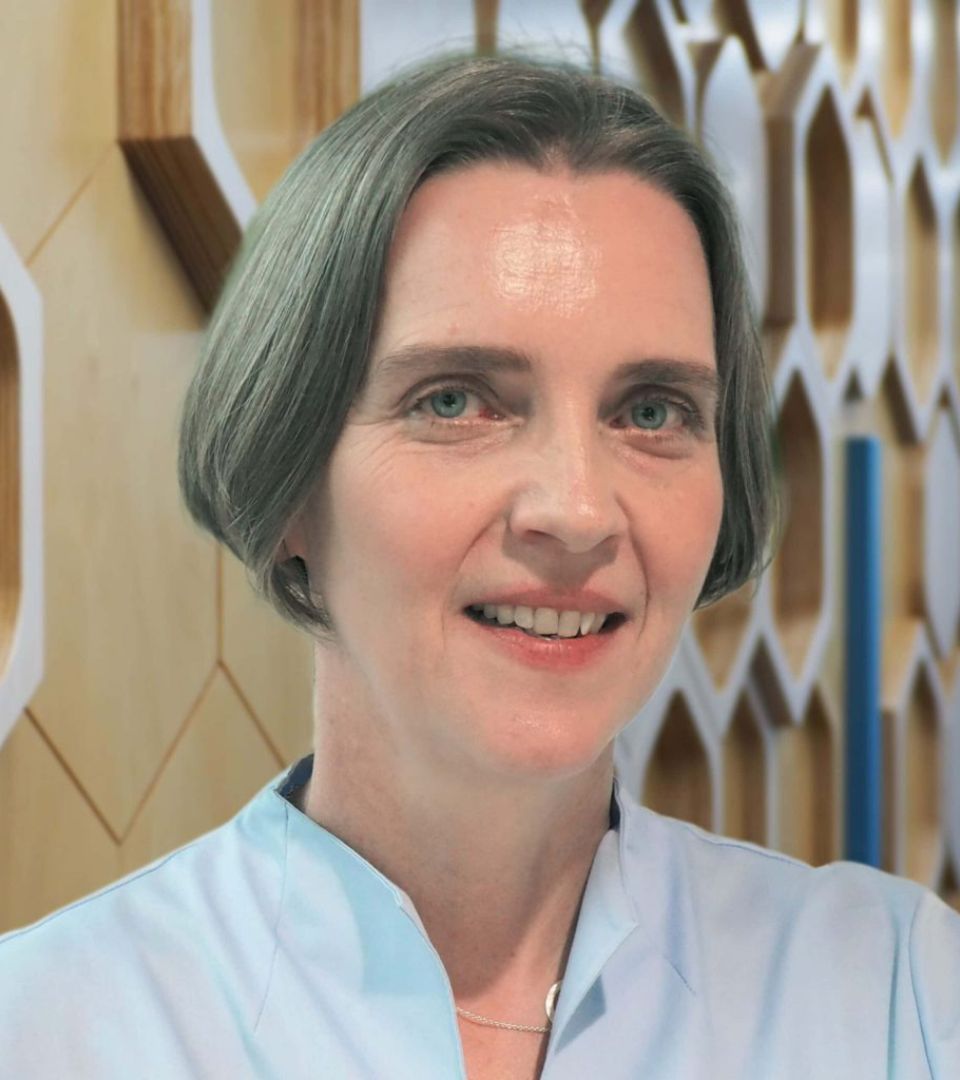
Professor Leonie Barner
QUT
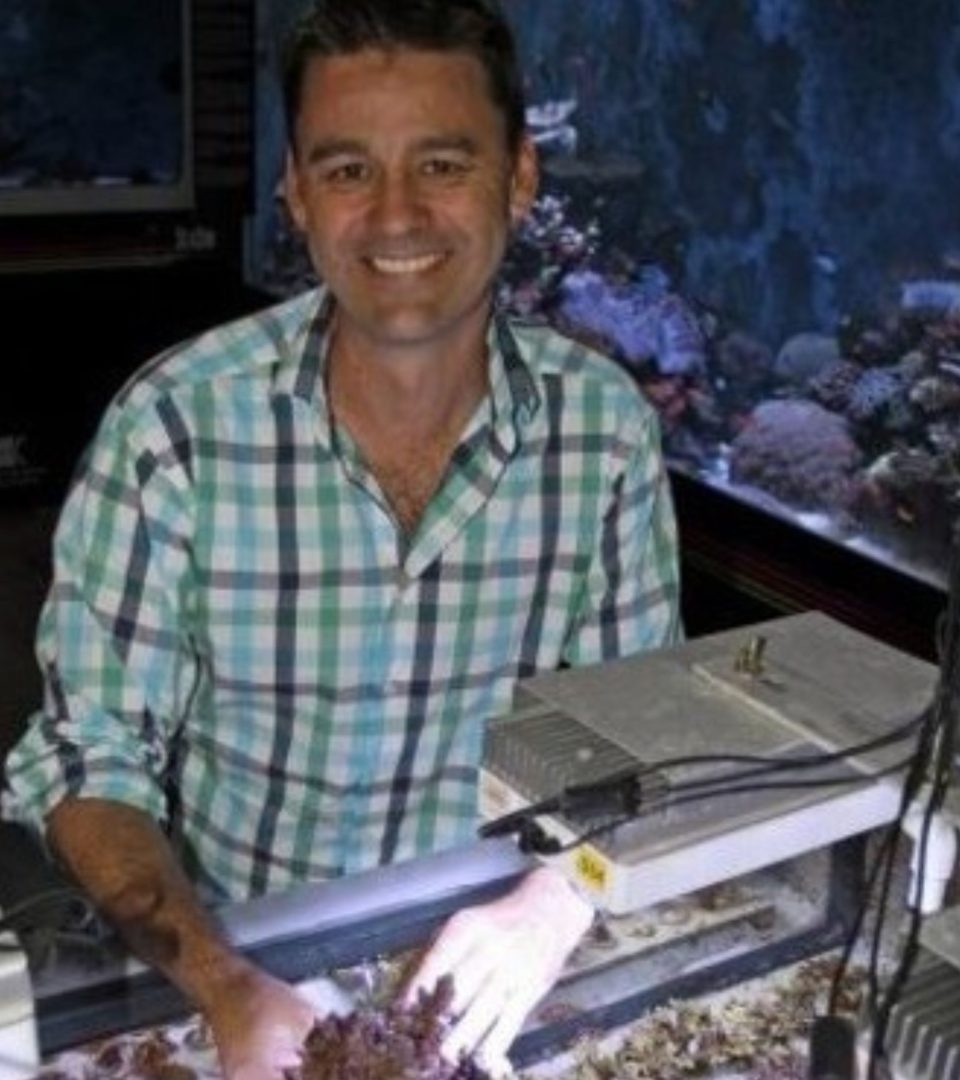
Craig Humphrey
AIMS
Dr Andrew Heyward
AIMS
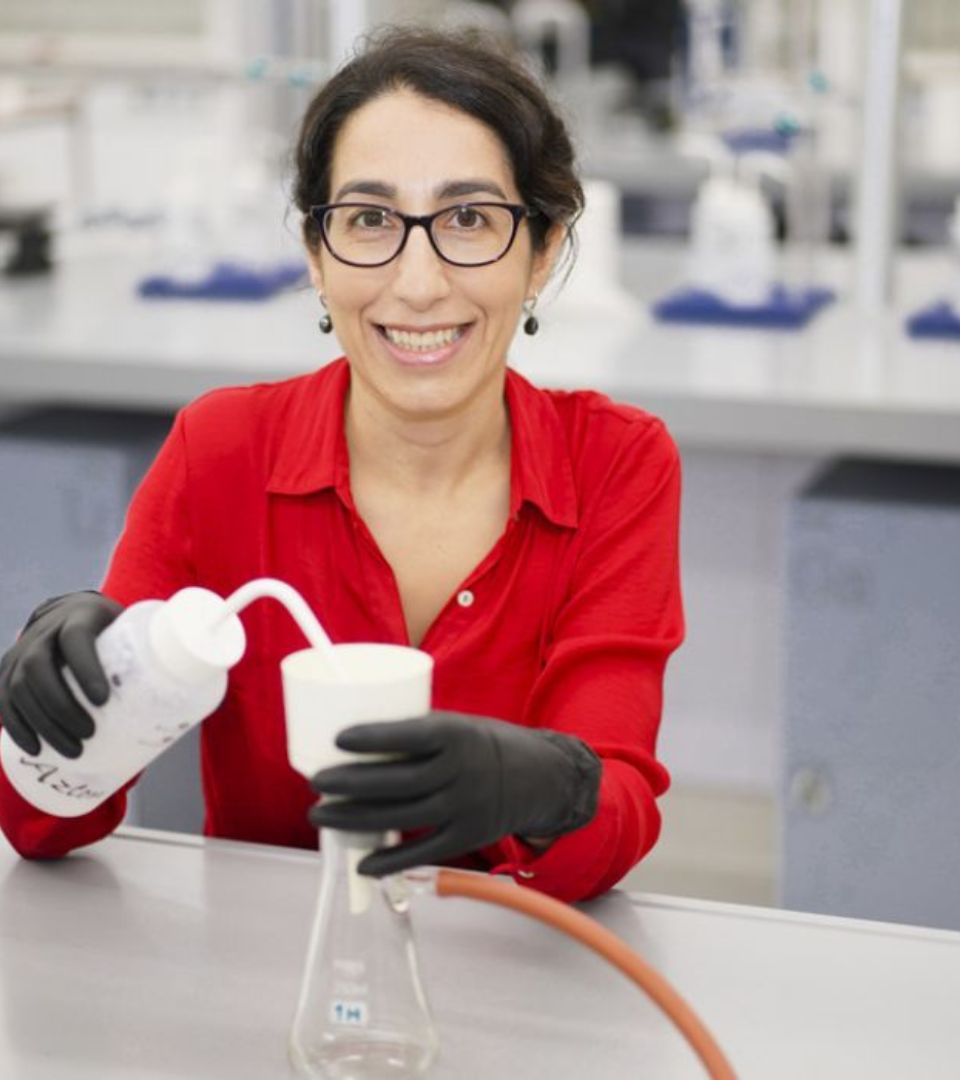
Dr Elsa Dos Santos Antunes
JCU
Dr Pirjo Haikola
RMIT
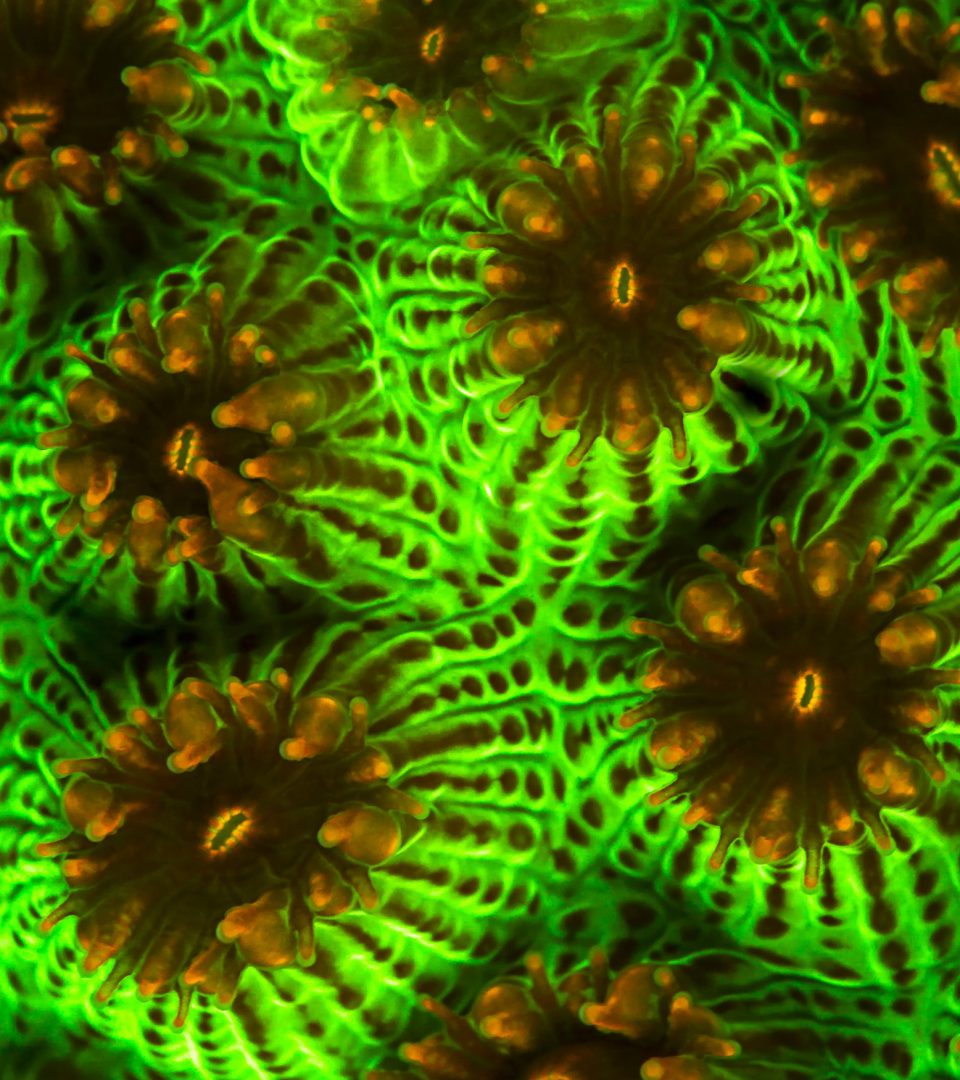
Dr Ateek Rehman
Postdoc, JCU

Dr Paul O'Brien
Postdoc, UQ

Dr Lalehvash Mogahddam
Postdoc, QUT