RRAP’s mission is to develop and test novel scientific solutions and make those available to managers to help the Great Barrier Reef and other coral reefs survive in the decades ahead, as global warming is gradually arrested.
These solutions will be developed and delivered in partnership with Traditional Owners, recognising their ancestral knowledge and the benefits of seeing the Reef as a cultural landscape beyond its biophysical features.
RRAP is part of the Reef Restoration and Adaptation Science (RRAS) component of the Reef Trust Partnership (RTP). This component is focused on restoring the Reef and helping it adapt to threats such as climate change through scientific interventions and processes. It also aims to create opportunities for Traditional Owners through education and development in RRAS programs, as well as employment in research and delivery roles such as scientists, technicians and researchers.
RRAP also collaborates closely with the dedicated Traditional Owner Reef Protection component of the RTP, which supports its own Traditional Owner Technical Working Group, and the Deadly Reef Ecological Adaptation Murri Scientists (DREAMS) team.
The Technical Working Group formed in 2020 to co-design fit-for-purpose Traditional Owner-led programs that contribute to the overall outcome of reef restoration and adaptation efforts.
RRAP also includes Traditional Owners as part of its formal governance arrangements, including the Board and Steering Committee.
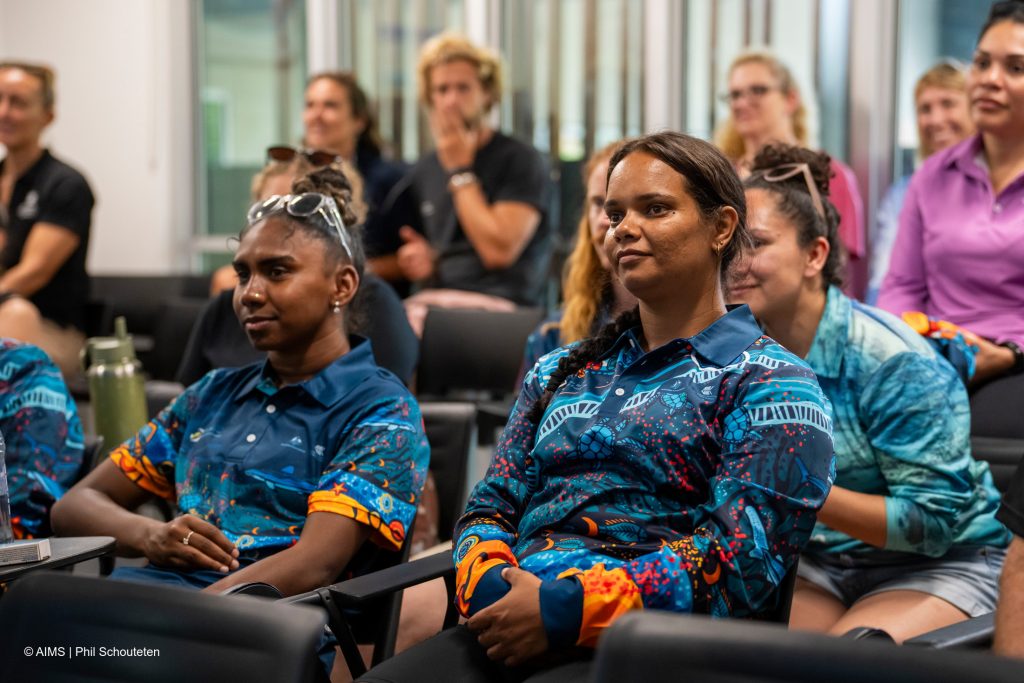
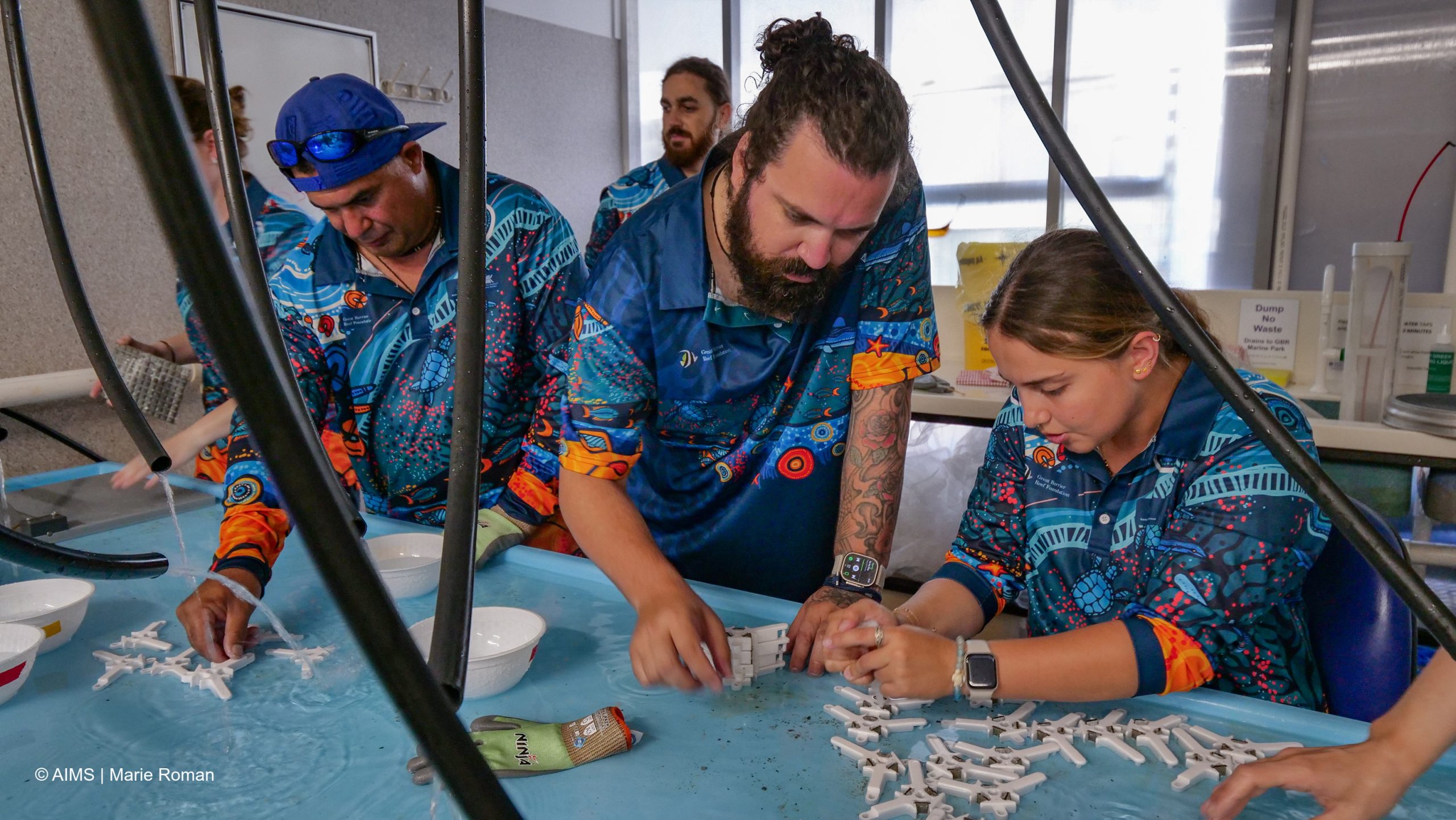
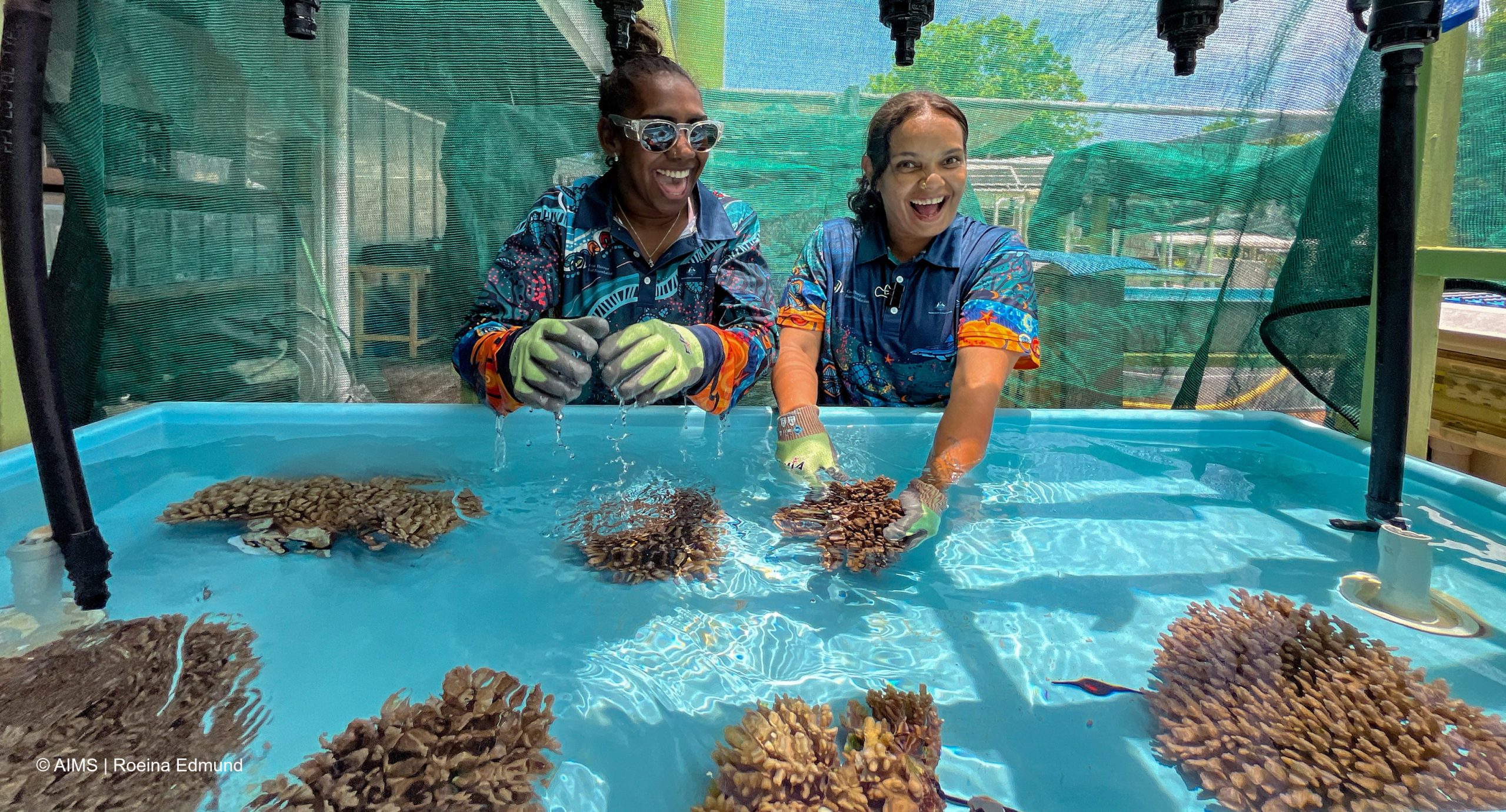
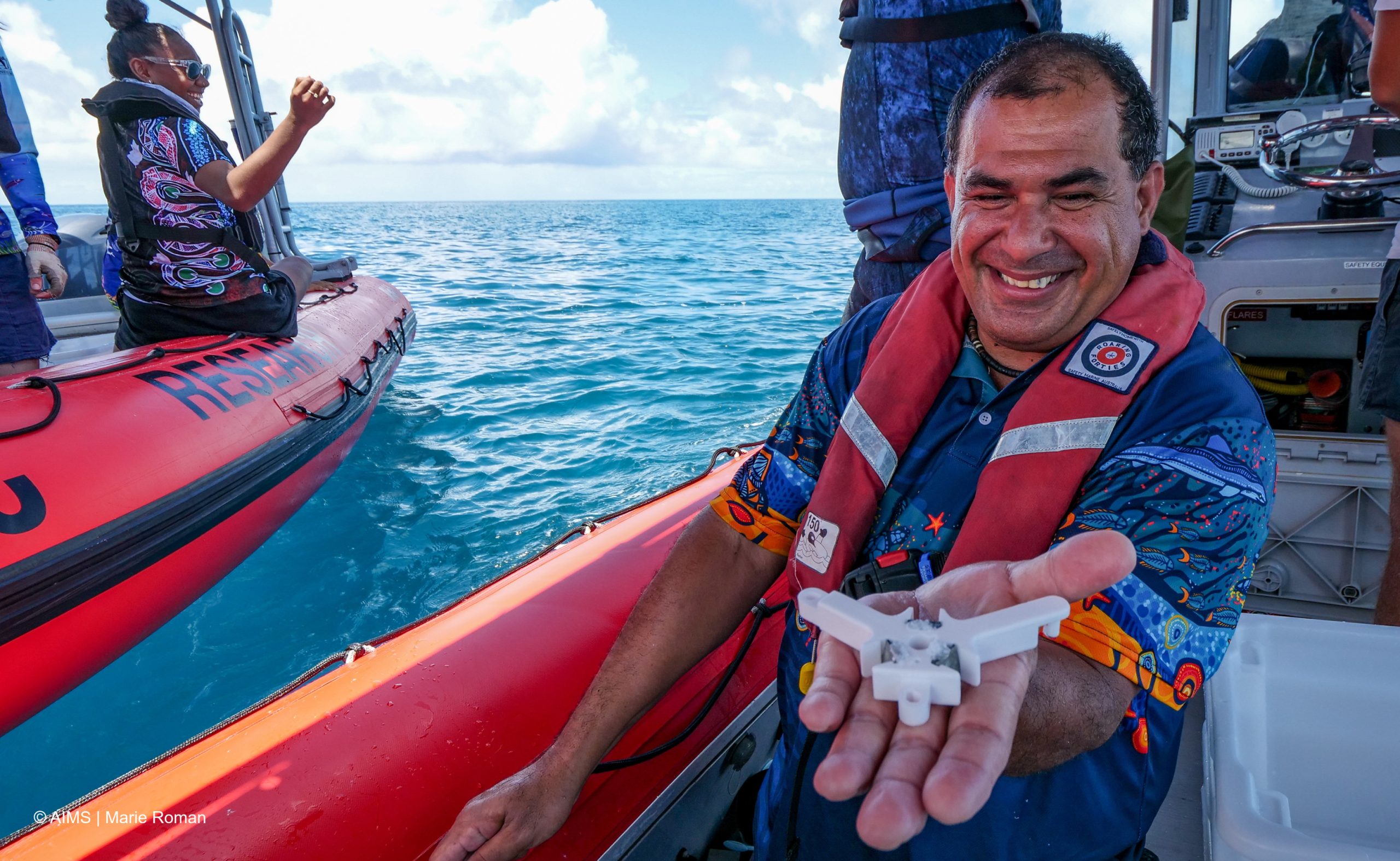
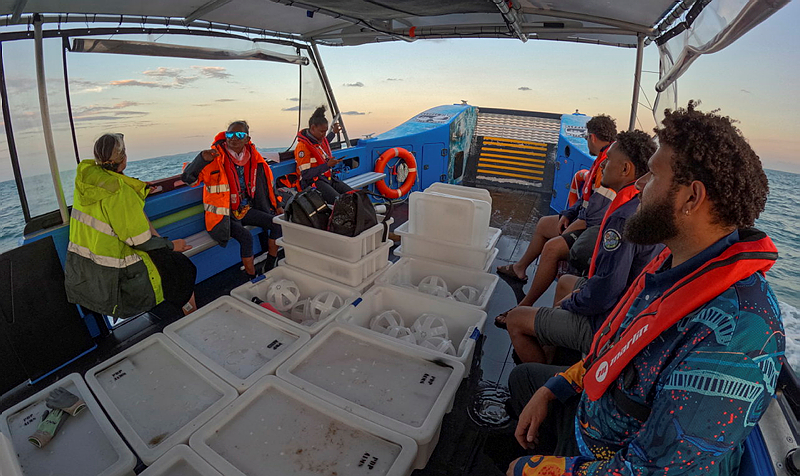
Indigenous Rangers from six Traditional Owner groups gathered on Heron Island on the southern Great Barrier Reef on Gooreng Gooreng, Gurang, Byelle and Taribelang Bunda land and sea Country to train in advanced reef restoration techniques developed through RRAP. © AIMS | Marie Roman
In 2019, Reef Traditional Owners identified a clear need for a tool to support informed decision-making about emerging reef restoration and adaptation activities happening on Sea Country. The Biocultural Risk and Opportunity Assessment Framework has emerged to address this need.
All RRAP activities on Sea Country occur only with the Free, Prior and Informed Consent (FPIC) of respective Traditional Owners.
This process is led by the Australian Institute of Marine Science (AIMS) Indigenous Partnerships team and guided by the AIMS Indigenous Partnerships Policy. Activities are informed, respectful, and led through cultural authority. Ongoing dialogue, consent, and shared decision-making are embedded throughout every project stage.
FPIC recognises Traditional Owners as custodians of Land and Sea Country with decision-making rights and cultural governance authority. AIMS upholds knowledge equity, accountability, and transparency, ensuring Traditional Knowledge and Indigenous Cultural & Intellectual Property are respected equally alongside Western science.
Samples and research outcomes remain part of Sea Country under FPIC, and all results are shared in culturally appropriate ways.
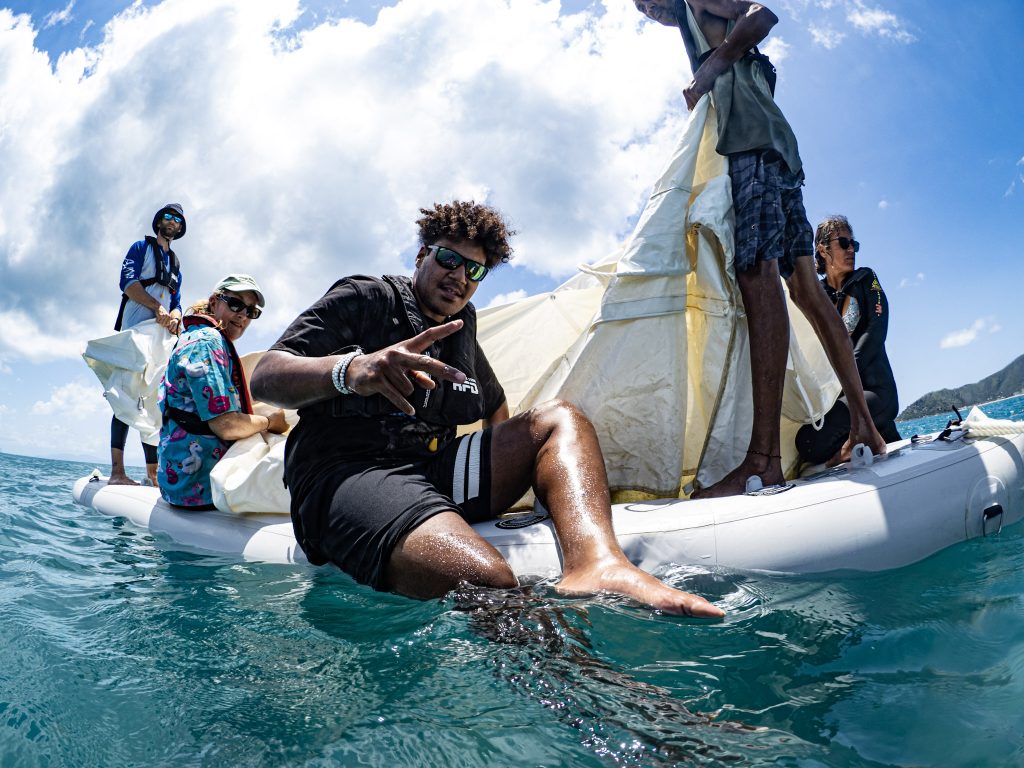
Traditional Owners, tourism operators and researchers work together to set up floating pools to collect coral spawn in the Whitsundays. Photo: Great Barrier Reef Foundation
This collaborative project advances Indigenous inclusion in reef management, recognising the inherent rights and responsibilities of Traditional Owners to lead within the Reef Restoration and Adaptation Program.
The initiative aims to develop a skills framework to translate emerging RRAP knowledge into a nationally accredited Indigenous training program, positioning Traditional Owners at the forefront of RRAP’s operational testing phase, the Pilot Deployments Program (PDP).
Aligned with the Reef 2050 Traditional Owner Implementation Plan, the project draws on RRAP and PDP expertise and partnerships to deliver training materials and practical skills to a pilot cohort of Indigenous Rangers, creating a pathway for integration into the Vocational Education and Training sector.
By strategically recruiting Rangers with advanced maritime skills, the project aims to ensure efficient, high-impact training that enhances existing capabilities. This initiative represents a transformative step toward empowering Traditional Owners to lead in reef restoration and adaptation, and the growing reef restoration industry.
The Project is led by the Australian Institute of Marine Science (AIMS) and the Great Barrier Reef Foundation (GBRF) through Partnership with the Australian Government’s Reef Trust.