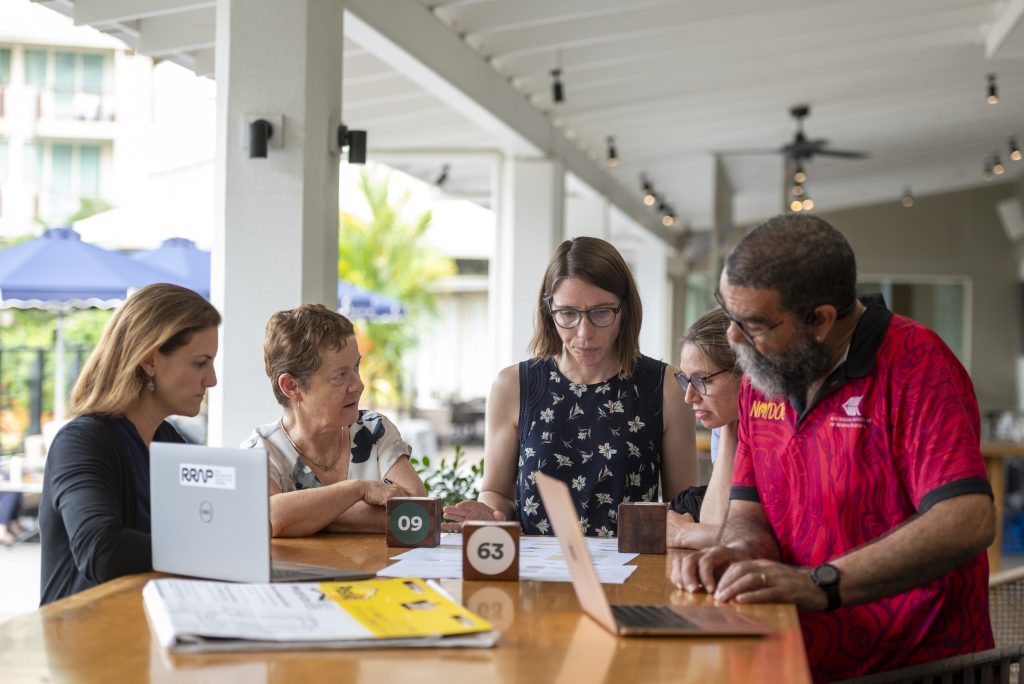
The Program is supported by a range of independent advisory groups that provide expert guidance, stakeholder insight, and community perspectives to inform decision-making and strengthen program outcomes.
The Reef Restoration and Adaptation Program’s Stakeholder Advisory Group is a forum for stakeholders and rights-holders in the Great Barrier Reef community to provide advice and insights to Program decision-makers.
The purpose of this advisory group is to:
Enhance stakeholder and traditional owner perspectives into RRAP decision making
Provide strategic advice on the potential benefits and risks of reef restoration technologies (social, economic, cultural, and ethical aspects)
Provide advice on strategic issues and future directions of RRAP
Consider links, opportunities, and benefits of RRAP activities with other activities that are occurring within the Reef community
The Intervention Risk Review Group (IRRG) is an independent, interdisciplinary expert group established to provide guidance and advice on the assessment and management of intervention risk across a range of scales.
Led by an independent Chair, Sue Barrell AO FTSE, the IRRG comprises highly recognised Australian and international experts from diverse fields. The group provides independent assurance that risks associated with Program interventions are being appropriately identified, assessed, and addressed.
Community Panels draw on diverse community perspectives and aspirations for the Reef and its management. The panels explore new ways of involving community members in longer-term, in-depth discussions with scientists and reef managers, particularly in relation to proposed novel reef interventions. This approach supports informed dialogue, shared understanding, and community confidence in emerging reef solutions.
Traditional Owner advisory groups, including the Traditional Owner Technical Working Group for Reef Restoration and Adaptation Science and Crown of Thorns Starfish and the Deadly Reef Ecological Adaptation Murri Scientists (DREAMS), support the identification, evaluation, and shaping of outcomes that deliver co-benefits for Traditional Owners and the Reef and catchment areas, ensuring that research and interventions are culturally informed and aligned with Traditional Owner aspirations.
We use cookies and other identifiers to help improve your online experience. By using our website you agree to this. To learn more, including how to change your settings, see our cookies policy.